
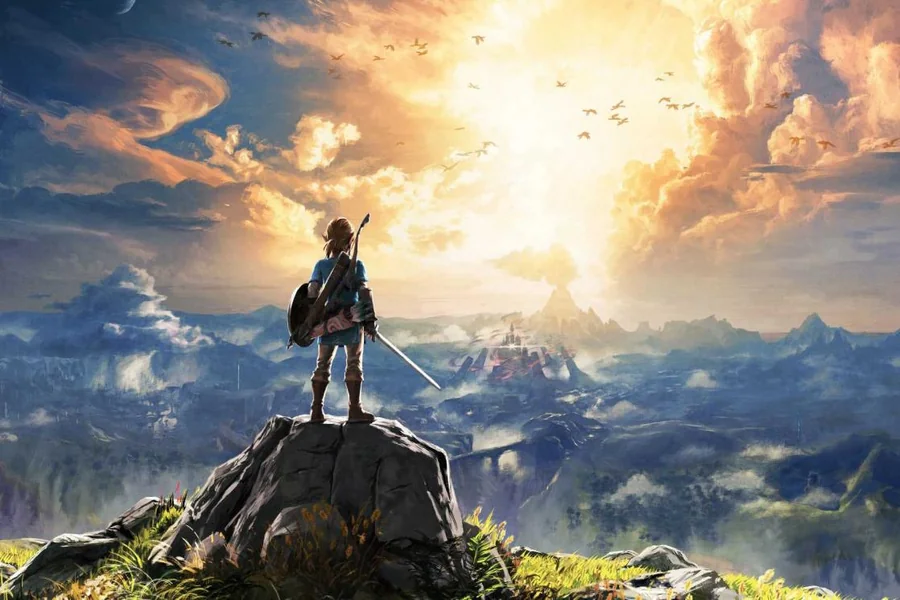
The boundaries between different forms of media have become increasingly fluid in recent decades. Nowhere is this cross-pollination more evident than in the relationship between video games and fantasy literature.
What began as a one-way street—with games drawing inspiration from books—has evolved into a complex, bidirectional exchange of ideas, aesthetics, and storytelling techniques.
Today’s fantasy authors are just as likely to cite The Elder Scrolls or Final Fantasy as influences as they are Tolkien or Le Guin.
The Evolution of Narrative Complexity
From Text Adventures to Epic Narratives
Early video games offered limited storytelling capabilities, often relying on external materials like manuals or novellas to provide context.
As technology advanced, games developed increasingly sophisticated narratives.
Modern RPGs like The Witcher 3 or Dragon Age: Inquisition feature branching storylines, complex character development, and nuanced world-building that rival—and sometimes surpass—their literary counterparts.
This narrative evolution has changed player expectations. Gamers now demand rich, immersive stories alongside engaging gameplay mechanics.
This demand has pushed developers to hire professional writers, including established fantasy authors, to craft their game worlds and narratives.
Non-Linear Storytelling
One of the most significant contributions of video games to fantasy literature is the normalization of non-linear storytelling.
Games frequently employ multiple storylines, player choices with consequences, and exploration-based narrative discovery.
These techniques have found their way into contemporary fantasy novels, which increasingly feature multiple viewpoint characters, non-chronological storytelling, and narrative structures that reward attentive readers.
N.K. Jemisin’s Broken Earth trilogy, for example, employs second-person narration and non-linear timelines that would feel familiar to gamers accustomed to discovering story elements out of sequence.
The “you are there” quality of her writing mirrors the immersive experience of role-playing games.
Detailed World-Building
From Maps to Encyclopedias
Fantasy literature has always emphasized world-building, but video games have expanded the scope and detail expected in fictional universes.
Games like Skyrim or Mass Effect present fully realized worlds with distinct cultures, histories, religions, and ecosystems that players can explore at their own pace.
Contemporary fantasy authors have responded by creating increasingly detailed and immersive worlds.
Brandon Sanderson’s Cosmere or Steven Erikson’s Malazan Book of the Fallen feature intricate magic systems, complex histories, and diverse cultures that reward deep engagement—much like exploring a game world’s hidden lore.
Environmental Storytelling
Video games excel at environmental storytelling—conveying narrative through setting, artifacts, and atmosphere rather than explicit exposition.
A ruined castle or abandoned laboratory tells its own story through visual cues and carefully placed details.
Fantasy authors have adopted this technique, reducing exposition in favor of revealing world details through context, dialogue, and character observations.
This “show, don’t tell” approach creates more immersive reading experiences while respecting readers’ intelligence.
Character Creation and Diversity
Beyond Traditional Archetypes
Role-playing games have long allowed players to create diverse characters that defy traditional fantasy archetypes.
This customization has influenced authors to move beyond the familiar “farm boy with a destiny” or “wise old wizard” tropes toward more diverse protagonists.
Games like Dragon Age feature protagonists of various backgrounds, sexual orientations, and beliefs, normalizing diversity in fantasy settings.
This representation has carried over into literature, with authors creating protagonists who reflect a broader range of human experience.
Complex Species Development
Video games have also pushed the boundaries of non-human character development. The Reptilian Characters in Elder Scrolls, known as Argonians, exemplify this trend.
These complex lizard-like beings have a rich culture, unique biological traits like Hist tree connections, and distinctive naming conventions that reflect their alien perspective.
Unlike simple “monster races,” they’re presented as a fully realized society with their own values, history, and internal diversity.
This nuanced approach to non-human species has influenced fantasy literature, with authors creating increasingly sophisticated non-human characters who transcend simplistic alien or monster stereotypes.
Martha Wells’ Books of the Raksura features non-human protagonists with distinctly non-mammalian social structures and values, while Adrian Tchaikovsky’s Children of Time explores truly alien perspectives in depth.
Interactive Elements in Modern Fantasy
Reader Agency and Participation
Video games distinguish themselves through interactivity—players make choices that affect outcomes. While books cannot offer the same level of choice, modern fantasy authors have incorporated elements that increase reader participation:
- Choose-your-own-adventure revivals: Series like Choices blend traditional novels with game-like decision points.
- Puzzle elements: Authors like Susanna Clarke (Piranesi) or Mark Z. Danielewski (House of Leaves) incorporate puzzles, codes, and mysteries that readers must decipher.
- Companion materials: Online resources, apps, and supplementary materials extend the reading experience beyond the page.
- Branching narratives: Some authors experiment with multiple potential endings or storylines that branch based on reader interpretation.
Mechanical Systems as Literary Devices
Game mechanics have inspired new approaches to fantasy writing. The “leveling up” concept from RPGs appears in LitRPG novels, where characters explicitly gain skills and abilities according to game-like rules.
Even mainstream fantasy has adopted similar progression systems, with characters developing powers in structured, quantifiable ways that mirror video game advancement.
Brandon Sanderson’s Mistborn series features a magic system with explicit rules, limitations, and power levels that would feel at home in a game.
This “gamification” of magic systems provides clear stakes and tension while avoiding the plot holes that can arise from less defined magical capabilities.
Pacing and Structure
Quest Structure and Subplots
Video games often organize narratives around a central quest with numerous side quests and optional content. This structure has influenced fantasy literature’s approach to pacing and subplot integration.
Modern fantasy series frequently feature a primary storyline supplemented by numerous subplots that readers can invest in according to their interests.
These subplots provide character development, world-building, and thematic depth without always directly advancing the main plot—similar to side quests in games.
Jim Butcher’s Dresden Files or Terry Pratchett’s Discworld novels balance self-contained stories with ongoing character development and world-building, creating reading experiences that reward long-term engagement while remaining accessible to new readers—much like long-running game franchises.
Episodic vs. Epic Storytelling
Games have demonstrated that episodic storytelling can coexist with epic narratives.
Series like Final Fantasy present self-contained stories within a shared multiverse, while others like Mass Effect tell a single story across multiple installments.
Fantasy literature has adopted both approaches. Some authors create standalone novels in shared universes, allowing readers to enter at multiple points, while others craft intricate series where each volume builds directly on the previous ones.
This flexibility lets authors balance accessibility with narrative depth.
Visual Language and Description
Cinematic Influences
Modern video games employ sophisticated visual storytelling techniques borrowed from film. These cinematic elements have influenced how fantasy authors describe action, scenery, and character movement.
Writers increasingly use “camera-like” perspectives, shifting between wide establishing shots and intimate close-ups in their prose.
Action sequences in particular have evolved to reflect the dynamic, visually striking combat of games, with precise descriptions of movement, environment interaction, and tactical decision-making.
Sensory Immersion
Games create immersion through multisensory experiences—visuals, sound, and sometimes even haptic feedback. While books remain primarily textual, modern fantasy authors have expanded their sensory palette to create more immersive experiences.
Descriptions now regularly incorporate not just sights and sounds but also smells, textures, and physiological responses.
This multisensory approach creates richly immersive worlds that engage readers more fully—a technique that mirrors how games use multiple channels to create presence.
Conclusion: A Symbiotic Relationship
The relationship between video games and fantasy literature has evolved into a symbiotic exchange of ideas, techniques, and innovations.
Games have pushed authors to create more immersive worlds, diverse characters, and interactive experiences, while literature continues to provide games with narrative depth and thematic complexity.
As technology advances and boundaries between media continue to blur, this cross-pollination will likely accelerate.
Virtual and augmented reality promise new storytelling possibilities that will influence both games and literature.
Fantasy authors may increasingly collaborate directly with game developers, creating transmedia narratives designed from the ground up to span books, games, and other platforms.
For readers and players, this convergence offers richer, more diverse fantasy experiences.
Whether encountered on the page or the screen, these stories build on the strengths of both traditions while pushing the boundaries of what fantasy can achieve as a genre.

