
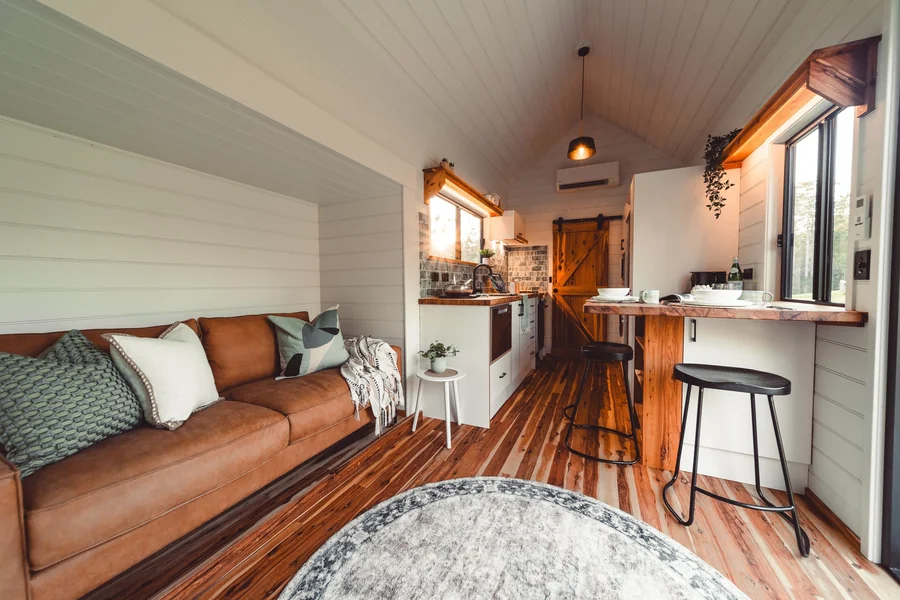
Tiny house living means living in a very small home. These homes are often less than 500 square feet. Some are as small as 100 square feet. People choose tiny homes for many reasons. Money is often the biggest reason.
Lower Housing Costs
Your biggest expense will drop fast. Tiny homes cost much less than big houses. You can buy a tiny home for $30,000 to $150,000. Big houses often cost $300,000 or more. This means lower monthly payments. Some people pay cash and have no house payment at all.
Rent also costs less. You can park your tiny home on family land. You can rent a small lot. Monthly lot rent is often $200 to $500. This is much less than house rent. House rent can be $1,500 or more per month.
Utilities Save You Money
Small spaces use less power. Your electric bill will be tiny. Many tiny homes use $30 to $100 per month in power. Big houses often use $150 to $300 per month. Heat and air cost less too. There is less space to keep warm or cool.
Water bills drop as well. Tiny homes use less water. Some tiny homes have tanks for water. You buy water by the tank. This can cost $20 to $50 per month. City water bills are often much higher.
Less Stuff Means Less Spending
Tiny homes have little storage space. You cannot buy lots of things. This stops impulse buying. You think before you buy anything new. Does it fit? Do you really need it? This saves lots of money over time.
You also sell things you own now. Moving to a tiny home means getting rid of stuff. You can sell furniture, clothes, and books. This gives you extra cash. Many people make $5,000 to $20,000 from selling their things.
Property Taxes Go Down
Big houses have high property taxes. Tiny houses often have lower taxes. Some tiny homes are on wheels. These are treated like RVs. RV taxes are much lower than house taxes. Property taxes can be $2,000 to $10,000 per year for big houses. Tiny home taxes might be $100 to $1,000 per year.
Some areas do not tax tiny homes at all. Check your local rules. Tax savings add up fast over the years.
Insurance Costs Less
Tiny home insurance costs less than house insurance. There is less value to protect. House insurance can cost $1,000 to $3,000 per year. Tiny home insurance might cost $300 to $1,000 per year. Some people use RV insurance for mobile tiny homes. This can be even cheaper.
You also have less risk of big losses. Tiny homes have fewer things that can break. Less stuff means fewer insurance claims.
Freedom to Move Saves Money
Many tiny homes are mobile. You can move to find cheaper living costs. Some areas have very low costs of living. You can move there and save money. You can also follow good weather. This saves on heating and cooling costs.
Moving also lets you find better jobs. You are not stuck in one expensive city. You can move where jobs pay more or cost less. While some people might spend their savings on entertainment like crazyvegas pokies online australia, tiny house dwellers often find more meaningful ways to use their extra money.
Lower Maintenance Costs
Big houses need lots of repairs. Roofs leak. Pipes break. Paint peels. Tiny homes have less of everything. Less roof to fix. Fewer pipes to break. Less paint to redo. Maintenance costs drop by 50% or more.
You can also fix many things yourself. Tiny homes are simple. You can learn basic repairs. This saves on repair bills. Big houses often need experts for repairs.
Debt Freedom Comes Faster
Lower costs mean more money to pay off debt. Credit cards get paid off faster. Student loans disappear sooner. Car payments end quickly. Many tiny home owners become debt-free in 2 to 5 years. This would take 10 to 30 years in a big house.
Being debt-free gives you choices. You can work less. You can change jobs. You can retire early. Debt freedom is real freedom.
Build Wealth Faster
Lower expenses mean more money to save. You can put money in savings accounts. You can buy stocks. You can start a business. Tiny home owners often save 30% to 70% of their income. People in big houses might save 5% to 15%.
This extra saving adds up fast. In 10 years, you could have $100,000 or more saved. In big houses, you might have $20,000 saved in the same time.
Emergency Fund Security
Tiny home living makes emergency funds easier to build. Lower monthly costs mean you need less money for emergencies. If you spend $1,000 per month, you need $3,000 to $6,000 for emergencies. If you spend $3,000 per month, you need $9,000 to $18,000 for emergencies.
Building a smaller emergency fund happens faster. You reach safety sooner. This gives peace of mind about money.
Retirement Planning Improves
Lower living costs make retirement easier. You need less money to retire. If you spend $1,500 per month, you need about $450,000 to retire. If you spend $4,000 per month, you need about $1,200,000 to retire.
Reaching $450,000 is much easier than reaching $1,200,000. You can retire years sooner. Some tiny home owners retire in their 40s or 50s.
Tiny house living changes everything about money. Your costs drop. Your savings grow. Your debt disappears. Your future gets brighter. The small space creates big financial changes that last a lifetime.

