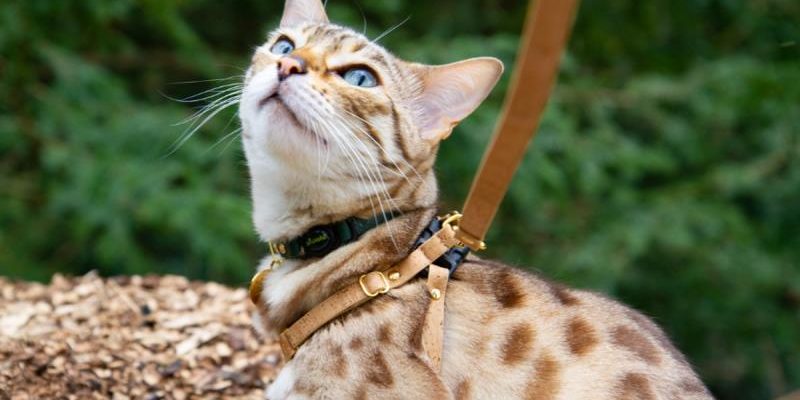
9 Mistakes To Avoid When Using A Cat Harness And Leash For The First Time
The first outdoor stroll with a cat harness and leash can feel like a milestone, yet many owners abandon the idea after one chaotic attempt. Direct to outdoor tests give too much overload to the senses and make an irreparable negative association. You can leave the equipment on the floor of the living room instead, letting the cat sniff it and rub against it for two days. Then loosely wrap the harness over the cat, take him/her through five-minute shifts, with treats, and so on. The cat is only ready to take the next step when it eats, plays and grooms in his normal state with the harness on him inside.
1. Skipping the Indoor Familiarisation Phase
A cat harness and leash should never make its debut on the front porch. Straight-to-outdoor trials overload the senses and create a permanent negative association. Instead, leave the gear on the living-room floor for two days, allowing the cat to sniff and rub against it. Next, drape the harness loosely over the cat for five-minute periods, offering treats at every stage. Only when the cat eats, plays and grooms normally while wearing the harness indoors is it ready for the next step.
2. Choosing Style Over Fit
Velvet finishes and pastel colours may photograph well, but a single finger-width of slack is the difference between escape and security. Slide two flat fingers under the neck strap; if the space exceeds that, tighten one increment at a time. Repeat the test around the rib-cage. Escape-proof designs add a secondary strap behind the front legs—ensure it sits just behind the elbow pouch, not on the sensitive armpit skin.
3. Attaching the Leash to the Wrong Ring
Many harnesses carry both a back and a chest D-ring. The chest ring is intended for behavioural training in dogs, yet cat owners often clip there by default. For felines, the mid-back ring keeps pressure off the windpipe and prevents a Houdini-style forward wriggle. Double-check the attachment point every time; colour-code it with nail polish if necessary.
4. Over-Handling the First Steps
The instinct is to steer the cat like a dog, but tension on the cat harness and leash triggers the opposition reflex: the harder you pull, the harder the cat pulls backward. Plant your feet, let the line rest on the ground, and follow two paces behind. Use a wand toy or treat to suggest direction rather than force. The cat learns that forward motion, not resistance, releases slack.
5. Ignoring Environmental Micro-Signals
A passing dog 30 metres away or the clang of a recycling bin can spike cortisol within seconds. Watch for tail-twitch escalation, ear flattening or sudden crouching. At the first sign, kneel to reduce your silhouette, speak softly, and retreat one metre—not all the way home—to show the cat that retreat is allowed. This prevents the “one-scare-quits-forever” outcome.
6. Scheduling the Walk at Rush Hour
Dusk and dawn are feline prime-times, yet they coincide with commuter traffic, joggers and off-leash dogs. Instead, select 10 a.m. to 2 p.m. on weekdays when sidewalks are quiet. Overcast weekdays further muffle sharp noises. A calm second outing builds confidence faster than ten chaotic prime-time exposures.
7. Forgetting the Post-Walk Ritual
Remove the cat harness and leash only after re-entering the apartment, then offer a high-value freeze-dried treat on the same mat each time. This creates a predictable terminus, so the cat learns that outdoor access ends voluntarily rather than abruptly. Skipping the ritual leaves the cat anxious about the next removal, making future gear-ups harder.
8. Neglecting Incremental Distance Goals
A successful five-metre balcony shuffle does not translate to a 200-metre park dash. Increase distance by 20 percent per outing, measuring in steps rather than minutes. If the cat freezes at any new radius, return to the previous radius for two consecutive days before trying again. This measured progression prevents overwhelming the sensory system.
9. Using Retractable Leashes
Thin cord retractables can spook cats with their mechanical whirr and can wrap around limbs in milliseconds. A 180 cm biothane fixed leash provides enough range for grazing yet remains light enough to drag without sound if accidentally dropped. Biothane also wipes clean after sidewalk puddles, keeping the gear neutral-scented.
Conclusion
Outdoor enrichment through a cat harness and leash is less about athletic mileage and more about trust mileage. By respecting the feline learning curve indoor acceptance, micro-distance gains, quiet hours and consistent rituals owners avoid the ten common pitfalls that turn a promising tool into a closet relic. The reward is not a cat that walks like a dog, but a companion that confidently explores the world while still looking back to verify that its trusted human is only two calm paces behind.
